Shop Now for Home Delivery or Local Pickup. Free Delivery with $250 order!

Zero Waste Skincare - Why Tallow Balms & Lard Soaps are Worth All the Hype

written by

Dana Workman

posted on

January 29, 2024

tallow-skincare.webp

What were soaps and beauty products made out of before we had highly processed seed oils and mineral oils? Animal fats.

It’s really only been in the last 100 years or so that these processed oils were available and in EVERYTHING.

And it’s not because they’re better for us… it’s because they’re cheaper.

I know we want to believe that if a product is on store shelves it’s safe, but unfortunately that’s just not the case.

Most soaps and lotions available today are made with cheap oils + chemical colors and toxic fragrances.

These products don’t just sit on top of our skin, our bodies absorb and circulate them.

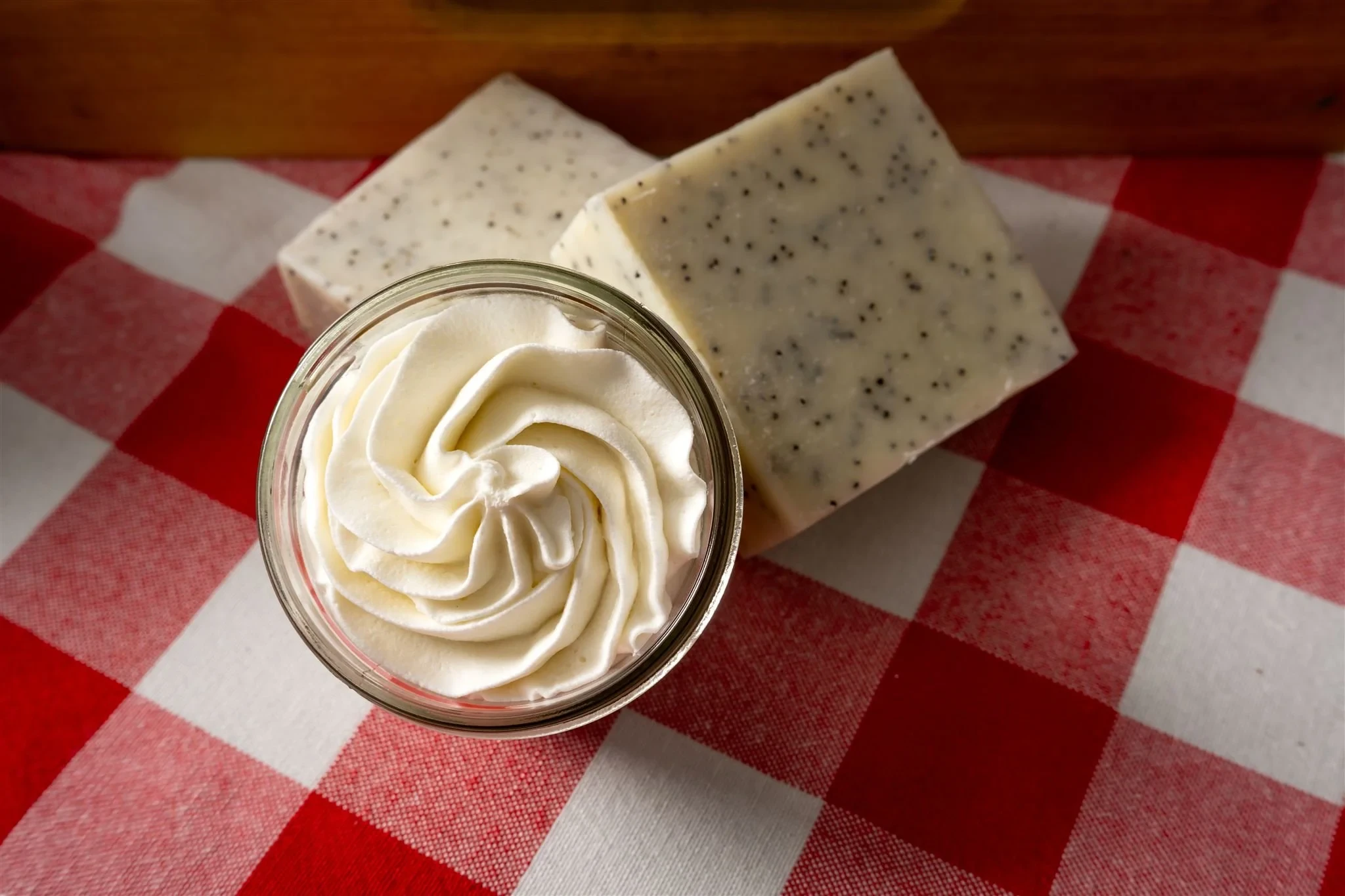
We’ve been making Old Fashioned Lard Soaps from our pastured pork fat for years.

It’s all we use for hand soap, body wash, face wash, and if we didn’t have such hard well water I think it would be great as a toxin free shampoo too!

I hadn’t found a good alternative for lotion until tried my first tallow balm a couple years ago at a homesteading conference.

The conference room was so dry that my hands and lips were cracking and bleeding, so I went to check out the tallow vendor.

I reluctantly handed over my credit card when she said the little jar was $45, but I quickly realized it was worth every penny.

It felt incredible, and only took the tiniest amount to rehydrate my dried cracking hands and lips.

Plus, it healed my skin instead of just temporarily making it feel better then needing to keep applying more lotion and chapstick. You know how once you use chapstick you seem to never be able to stop using it?! That doesn’t happen with tallow.

The little jar I bought at the conference lasted me almost a year.

I decided then I wanted to make tallow lotions and lip balm out of the suet from our beef cattle, but like most other projects it kept being put on the backburner, until….

I was introduced to Alyse Lewis from ButterHide - a woman owned startup business located near us in Southern, Ohio.

Alyse takes the suet from our beef cattle, and turns it into all these nourishing tallow products!

As we’ve released these products, it’s brought up lots of questions about what is tallow, what is a tallow balm, how do you use it, and what’s all the hype about tallow balms anyway?

So First - What Is Tallow?

Tallow is made from beef suet, a specific kind of fat that protects the organs inside a beef animal.

To make tallow the fat is rendered, aka gently melted down. The final product is tallow!

Tallow is great to use for cooking oil, but it’s also AMAZING for our skin.

It’s full of vitamins and minerals including A, B12, D, E and K, which are all so so nourishing.

Unlike seed oils, the nutrient profile of tallow is very similar to our own skin so it absorbs easily.

Tallow also helps boost our skins ability to fight free radicals, plus increases collagen levels and skin elasticity.

Next Question - What Is Tallow Balm?

Tallow balm is rendered tallow that has been mixed up to create a lotion type skincare product.

Our tallow balm includes our tallow + organic cold pressed extra virgin olive oil, raw honey, beeswax and organic essential oils. Click here to see all our options.

How Do You Use Tallow Balm?

Just like you’d use any face moisturizer, lotion or lip balm!

Our whipped tallow balm can replace all your body lotions, hand lotions and facial moisturizers.

We recommend our unscented tallow balm for young children.

Any of our other scents can be used for hands, body, or face, but each essential oil also has a specific healing property.

Lavender: Anti-inflammatory, best for soothing skin ailments such as eczema and psoriasis. Calming

effect on mood, anxiety, stress and depression.

Vanilla Bean: High in antioxidants that combat free radicals to reduce the signs of aging.

Frankincense: rejuvenates mature skin while helping soreness and pain

Peppermint: cools and soothes irritated skin, and can help reduce tension due to headaches or upset

stomach.

Honey Rose Includes:

Rose Absolute: rejuvenates mature skin, reduces the appearance of fine lines and wrinkles

Indian Sandalwood: Helps Balance skin tone

Rosalina: Anti-bacterial while reducing the appearance of wrinkles

Neroli: Reduces the appearance of scarring and blemishes

Palmarosa: Provides skin-balancing effects for all skin types

Harvest Spice Includes:

Bergamot: Cleansing properties that are best for acne and skin rashes

Lime: Invigorating, Cleansing and purifying properties and can reduce stress and anxiety

Clove: Anti Inflammatory and antimicrobial properties

Copaiba: promotes a clear, smooth skin complexion and well as having anti-inflammatory properties

Tallow Man Balm Includes:

Cedarwood: soothes irritation, redness, inflammation and itchiness

Juniper Berry: Cleansing and purifying properties to treat acne and dermatitis

Fir Needle: used to combat body odors and can improve respiratory conditions.

Patchouli: Augments skin and hair health while relaxing the mind

And as far as what all the hype is about… that’s because tallow really is fantastic.

Alyse, the owner of Butterhide, started making tallow balms to heal her sons eczema. Now even when he has a flare, it’s calmed down quickly by tallow balm.

Jesse uses it on his hands and they went from literally cracking and bleeding this Winter to healed within a day.

My Mom loves it for her hands and face.

I threw away all the other lotions and chapsticks I owned.

I also use it on both of my girls when their lips and faces get windburnt from being out free-ranging.

Between our lard soaps and tallow lotions, our skincare is super simple around here - wash with lard soap, moisturize with tallow balm, put on tallow lip balm. Done!

Shop Tallow Balms Here

A few other things I want to share about tallow balms and lard soaps…

  1. They allow us to use the entire animal and not waste the fat, which is so important to me.
  2. I value things more when I know how hard we worked to raise the beef steer or hog, that the butcher took the time to save the fat for us, and I value the time involved to render the fats and make soaps and tallow balms, plus the mess to clean up afterwards!
  3. The less I buy from big name companies, the better I feel. It’s satisfying to break free of the societal norms and be more community sufficient.
  4. It bothers me that most body care products are so full of toxins. I’m proud to be part of providing my family and community with safe alternatives.
  5. I love collaborating with and supporting women owned business in rural Ohio! Alyse from Butterhide makes our tallow balms and Heather from Twisted Violet Homestead makes our soaps using the beef and pork fat from our animals.

If you’d like to check out the tallow balms and lard soaps we have available, this link will take you into our Online Farm Store.

**Our online store has a minimum order size of $125. If you’d like to order just tallow balms or soaps, please order for Farm Pickup and let me know in the comments you’d like your order shipped. I will adjust to order to include the $10 shipping fee.

Shop Tallow Balms Here

A couple of our favorite clean products that we don’t make ourselves:

Tallow based deodorant from Primally Pure - this is the only one we’ve found that doesn’t burn our armpits!

I love the bug spray and dry shampoo from Root & Clay - use code DANA at checkout for a discount.

If you’d like to stay in the know about all farm happenings, special offers, restocks, and just connect to our farm and family - our email list is the place for that. Add your name and email address below to join us!

Sustainable & Regenerative Farming

More from the blog

UPS Shipping vs Home & Office Delivery: What's the Difference & How to Choose What's Best for You!

UPS Shipping vs. Home & Office Delivery: What’s the Difference & How to Choose What’s Best for You Along with multiple local pickup locations, we offer two ways to get our pasture-raised meats to your doorstep - UPS shipping AND our once-a-month local delivery routes. Here’s how each works so you can pick the best option for your family! UPS Shipping (Weekly) When: Every TuesdayWhere: Throughout Ohio and most of the MidwestWhat we ship: Nearly all products except eggsHow we pack it: Orders are packed in compostable insulated boxes (the liners are made of corn!) with ice packs and picked up directly from our farm freezers by UPS on Tuesday evenings.Delivery timeframe: Most customers receive their order on Wednesday, some farther locations may see it arrive on Thursday.Shipping fee: $10 or Free on orders over $250 Shop for UPS shipping here! Home & Office Delivery (Monthly) When: First week of every month (adjusted if there’s a holiday)How: Delivered in a temperature-controlled van by another trusted local farmer. If you’re not home, we’ll leave your order in an insulated box or recycled styrofoam cooler to keep it safe and frozen.Delivery timeframe: Varies depending on number of stops and other pickups/deliveries, typically between 8-3pm. Delivery fee: $6.95 or Free on orders over $250 Local delivery allows us to deliver ALL our products, plus: EggsBulk meat shares like whole and half hogs or beef Southwest Ohio Route (Wednesdays): Hillsboro, Wilmington, Mason, Montgomery, Cincinnati, Batavia, Fayetteville, Mt. Orab & Surrounding Communities South Central Ohio Route (Thursdays): Leesburg, Greenfield, Frankfort, Circleville, Kingston, Chillicothe, Waverly, Bainbridge & Surrounding Communities Shop for Home & Office Delivery here! We also deliver to these pickup spots during local delivery week: Two Roasting Joes (Chillicothe)Twisted Violet Homestead (Hillsboro)Way Farms (Waverly) Shop for local pickup or delivery here. Need to Change Your Delivery Option? No problem—here’s how: Click the "Change" button next to the current delivery location shown at the top of the website (like in the screenshot below).Enter your ZIP code when prompted.Select your preferred option—whether that’s home delivery, a local pickup spot, or UPS shipping. Common Questions Can I have eggs delivered if I choose UPS shipping? Unfortunately, no. We don’t currently ship eggs, they’re too fragile! What if I won’t be home for my delivery?No problem! Just unpack your order into the freezer as soon as you get home from work. Your order will be an in insulated box or cooler with ice packs as needed to keep it safe. Can I subscribe or schedule repeat deliveries?Yes! Choose to subscribe at checkout, or check out our Monthly Meat Box program. Subscribe to your favorites, make any changes before the order deadline each month, then we’ll take care of the rest! We send plenty of order reminders ahead of time so you know when your delivery will arrive. Sustainability Matters I know sometimes the environmental aspect of shipping and delivery is controversial, but here’s my opinion - the UPS truck is already in my neighborhood every Tuesday and traveling through most neighborhoods every week too. Adding our boxes to their existing routes keeps A LOT of individual cars from needing to drive out to the farm. We only ship within the UPS 2 day ground zone, I have chosen not to put meats on a plane to deliver all the way to the west coast. Same with our local delivery routes - we can load up orders for many many families instead of everyone needing to make a trip to the farm. Plus, we’re very mindful of coordinating multi-purpose trips, working with other farms who need product moved around, and making sure we route in the most efficient way possible. Our insulated shipping boxes are recyclable and compostable. They can be reused multiple times if you’re able to drop them off to us at the farm or ship back to us! To ship back to us - remove all ice packs and perishable stickers from the outside, place a small book inside, and mail back using media mail shipping rates with USPS. Reach out if you have other questions about any of our pickup or delivery options! We know you’re busy so we want to make shopping for local food as easy and convenient as possible.

When I Almost Gave Up on the Farm Dream

If you've been reading my emails for awhile you may have heard this story before, and I’m not sure why I never made it a blog post before now! In August of 2019 I pretty abruptly left my off-farm job. I had reached a point of burnout and childcare struggles that I couldn't do it anymore. It was a risky decision. That job paid our bills, provided our health insurance, the vehicle I drove every day, my cell phone plan, retirement account, all of it. It hadn't even been a year since we had our second baby and took out 2 mortgages to buy our farm, but somehow I knew it would be ok. I knew the farm wouldn't be replacing my income anytime soon, but I had a specific financial goal for the year. One of our mortgage payments is due as a lump sum on January 1st every year. I wanted the farm to make that payment 100% on it's own without having to put any of our personal off-farm earnings towards it. So I'm at the last winter farmers market of the 2019 season. The market closes in 20 minutes. The farm payment is due the following week. I was SO CLOSE, but hadn't sold enough to cover the rest of the mortgage payment. We had the money in personal savings thankfully, but not hitting that goal was leaving me with so much doubt about whether I made the right decision and if I should give up and go find another job. ​ What happened next still brings me to tears every time I think about it. One of our customers showed up 15 minutes before the market closes, picks out a few items, then hands me her credit card and asks me to also load 12 gift cards. Those gift cards added up to almost exactly the amount I still needed to make the mortgage payment.​​ There was only $11 left in the farm bank account after the check cleared, but I made the mortgage payment with 100% farm income dollars. I took this as a sign I was exactly where I needed to be, doing exactly what I was meant to be doing, and that I needed to keep going.​ We can't thank you enough for being a supporter of our farm and family. You're not just another order number or sale to us. We see you, we appreciate you, and we would not exist without people like you who value the work we do and go out of your way to shop with us. ​ We are honored that you choose to help us keep a roof over our heads, farmland under our feet, and give our girls the opportunity to grow up this way. Join our email community below for more behind the scenes stories like this, plus recipes and restock alerts on customer favorites!

Grass-Fed Beef Fed Corn? Deciphering Beef Labels

As a consumer looking for the healthiest beef options to feed your family, labels can make this so confusing. You have Organic, All-Natural, Pasture-Raised, Grass-Fed, Grass-Finished, and it's been so long since I've had to shop the grocery store for meat I'm probably missing some but I think I'll start with these. It wasn't very many years ago I was a grocery store shopper who looked for the cheapest ground beef and would bring the giant package home, split it all up into smaller chunks and refreeze. You know, being thrifty.  Cheap food has its place. I've been peanut butter sandwich poor, and I know inexpensive commodity goods help keep bellies full. I judge no one for making that decision for their family, especially when the choices are cheap ground beef or a box of Twinkies.  What does bother me though, is when large corporations market themselves as having quality products, and charge a premium price, when it’s the same as the cheap stuff next to it on the shelf. The meats and eggs you get from farms like ours are far superior to what you’ll find in any grocery store or delivery service - even if the cute labels, certifications and “creative” marketing campaigns try to convince you otherwise. This blog post is simply to help decode some of the labels you'll see and hear as you're shopping for beef, and also so you know what questions you'll want to ask to be sure you're getting the product you want.  It's not my style to criticize conventional beef production or say my way of raising beef (100% grass-fed with zero grain) is the way everyone should be doing it. What we prefer and what works for our farm doesn't work for everyone. What's most important to me is that you know what you're buying and that you make efforts to buy it locally.  Ok, let's dive into the labels. Organic - I think we all have this vision that organic cattle are grass-fed on lush green pastures and live a superior life to those raised conventionally. The reality is, if you're buying organic beef from any grocery store the animal was more than likely raised in confinement just like a conventional steer. The only difference was they were fed organic grain and no antibiotics or growth hormones. All-Natural - This is a super vague term that really doesn't mean a whole lot when you see it on any food label. Typically, this means the cattle were not given a growth hormone implant or antibiotics but are fed conventional GMO grain in a feedlot type setting.  If you're buying locally, this is still going to be better than what you'll find at the grocery store, but ask your farmer questions so you know their production practices.  Pasture-Raised - this usually means is that cattle were given access to pasture while being fed grain. I've known some farms that have lots of pasture acreage and a significant portion of the animals diet came from forage, but I've also seen others where they are basically on a dirt lot with no grass and the majority of their diet came from grain. Ask questions and go visit the farm!  Grass-Fed - here's the big shocker - the label "Grass-Fed" can be applied to cattle that ate grass for part of their life but then were "finished" on grain.  The reason this matters is because once a steer starts eating grain, the ratio of Omega 3's to Omega 6's immediately begins to change along with the concentration of CLA's, vitamins and minerals that come straight from the forage diet the cattle are consuming. I think it’s misleading to allow beef that ate grain to be labeled as grass-fed, but they don’t let me make the rules. Grass-Finished - How we raise our beef! These cattle have been fed and finished on nothing but grass and forage. If you're searching for grass-fed beef, this is probably the product you're looking for. You'll still want to ask questions about feeding and management practices such as growth hormone and antibiotic use if that's important to you, although usually that's not something farmers producing this type of beef are into.  Another question I've gotten is - can you really raise 100% grass-fed and finished beef in Ohio? What happens in winter when the grass isn't growing?  The answer is yes - it is possible and here's how we do it! In the Spring/Summer/Fall they are out on pasture grazing and in the Winter we feed them hay, which is just dried and baled forage. Our cattle are never fed grain. Finishing beef on forage alone does take more management from the farmer and longer for the animal to grow, but it's the quality beef I want to feed my family, and what works well for our farm.  No matter which type of beef you buy or the farm it comes from, it's important to seek out local options.  Buying locally supports profitable family farms and rural economies, it keeps beef from traveling across the country and world to get to store shelves, it tastes better, and it allows you as a consumer to have a connection to your farmer and food.  Shop our collection of 100% Grass-Fed & Finished Beef Here Want more randomness straight from the farm? The best way to connect with us is our email farm community! Plus, you’ll get a free recipe book too.